
Hiring a Land Clearing Contractor in Roane County, TN
Hiring a land clearing contractor in Roane County means choosing among excavating and grading outfits, forestry mulching operators, tree services, and loggers, each suited to different work. Tennessee only requires a state contractor license once a project reaches $25,000, and neither Roane nor Loudon County has adopted the state's home improvement license for smaller jobs, so much clearing work here falls below any license requirement. That puts more of the checking on you. This guide covers when a license is required, which classifications fit clearing, how to look one up, what to ask about insurance, the questions to ask before you hire, and what belongs in writing.
When Tennessee requires a license
The state Board for Licensing Contractors says a contractor license is required for "projects of $25,000 or more when acting as a prime contractor," and that the license has to be in hand before bidding or negotiating a price. For subcontractors, the $25,000 counts the portion of work they perform, "including materials, equipment, and labor."
For smaller jobs, only some counties use the state's home improvement license, which covers work over $3,000 and under $25,000. The state's home improvement county page names nine of them: Bradley, Davidson, Hamilton, Haywood, Knox, Marion, Robertson, Rutherford, and Shelby. Neither Roane nor Loudon appears.
For clearing in Roane County or western Loudon County, then, the state license comes into play only once the job reaches $25,000. A large house-site job with a long drive, or many acres of clearing and grading together, can cross that line. When it does, ask for the license number and look it up.
Classifications that fit clearing
A Tennessee contractor license lists the kinds of work its holder may do. The state's classification outline (last modified July 20, 2026) includes several that match clearing work:
- HC-5, "Clearing, Grubbing, Snagging and Rip Rap," under heavy construction, the closest fit by name.
- BC-13, "Site and Subdivision Development," and BC-28, "Excavation," under building construction.
- MU-C and HRA-A, each "Grading and drainage."
- Specialties such as S-Site Prep, S-Erosion Control, S-Slope Stabilization, and S-Tree Trimming.
The outline says the heavy construction classifications and the specialties don't require a trade exam. When a license applies, check that its classification matches the work in the quote.
How to look up a license
- Get the license number and the exact business name it's issued to.
- Search it on the state's Verify a License page, linked from the classification outline.
- Confirm the license is active, the name matches the company quoting you, and the classification covers the job.
- Questions go to the Tennessee Department of Commerce and Insurance, (615) 741-2241.
Ask about insurance on every job
A license line doesn't make the work less risky. Clearing brings heavy machines, falling trees, and sometimes fire onto your land, often near a house, a well line, a fence, or a neighbor. Whatever the size of the job, ask for:
- A certificate of general liability insurance sent to you by the insurance company or agent, naming you as the certificate holder, with the coverage limit shown. That's the policy that answers if a tree lands on a roof or a machine tears up a buried line.
- Workers' compensation. Ask whether they carry it and how many people will be on your property.
If a logger or tree crew is coming in ahead of the clearing, ask them the same questions.
Questions to ask before hiring
- Will this job come to $25,000 or more? If so, what's the license number and classification?
- Can your insurer send me a liability certificate, and does your crew have workers' comp?
- Which parts will be mulched, which cut and piled, and which dug out, and why?
- How will you work this slope, and where will the machine travel?
- What do you do when you hit chert or rock, and does it change the price?
- Where does the debris go? If it's burned, who gets the permit, and is burning allowed here?
- How will you keep machines off the septic area, the creek banks, and the trees I'm keeping?
- Is any of this on TVA land, and who will prepare the vegetation management plan if it is?
- Does the job need TDEC's stormwater permit or an ARAP, and who files it?
- Who calls Tennessee 811 before digging or grinding?
- How many days on site, what does an extra day cost, and what happens if it rains?
- What's due up front, and when are the other payments due?
- May I talk to a past customer, or see a job you've finished?
Put it in writing
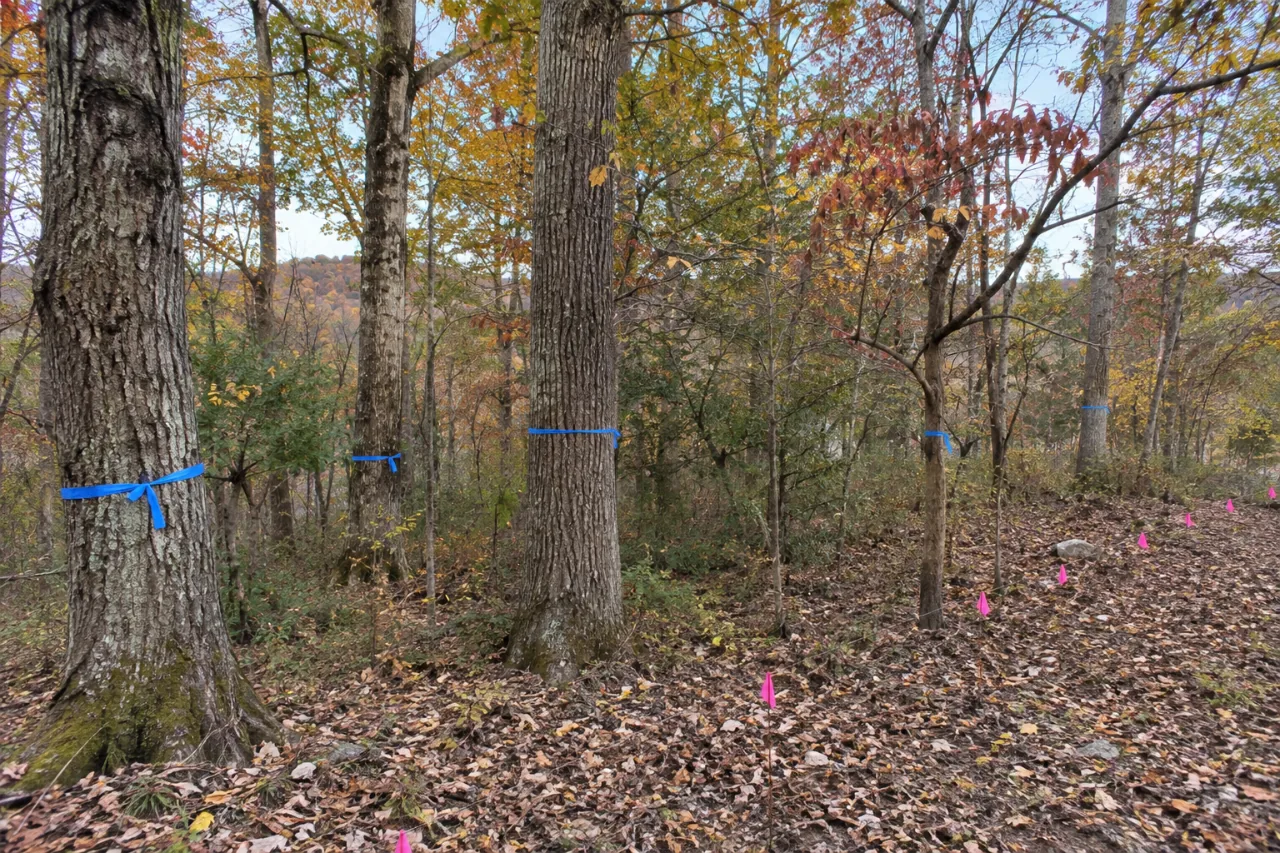
A text message isn't a contract. A sound clearing agreement shows the work area on a map or with flags, names the method for each part, says what happens to stumps and debris, lists the trees and features to protect, assigns permits and the 811 ticket, gives the price or rate and the payment schedule, and sets a start and an expected finish. The cost guide has a longer checklist. Keep the deposit modest, tie payments to finished work, and walk the job before paying the balance.
Warning signs
- No written quote, or a quote that doesn't describe the work.
- All or most of the money up front.
- Cash only, or pressure to sign on the spot.
- No insurance certificate, or one that comes from the contractor rather than the insurer.
- A $25,000-plus job with no license number to check.
- Offers to cut on TVA land without approval, to push debris into a creek or over a lake bank, or to burn where it isn't allowed. The permits guide shows what applies.
More hiring questions
Is a tree service or a clearing contractor the right call?
It depends on the work. Tree services are set up for individual trees near houses and power lines, with climbers and bucket trucks. Clearing contractors bring mulchers, excavators, or dozers for whole lots, fence rows, and fields. Some do both. A house site is clearing-contractor work, with a tree crew for anything leaning over the house.
What about having a logger take the timber first?
A logger buying your timber stands in a different spot than a contractor you're paying. Ask for a written timber sale contract, see their insurance, and agree on who cleans up the tops and skid trails before any cutting starts.
Does the license matter on a small job?
Under $25,000 here, the state doesn't require one. Insurance, a clear written scope, and knowledge of the rules for your land matter more. On a steep lake lot or a hillside next to a branch, the cheapest quote can end up the costliest.
How this site can help
What this site does is pass your request along to one independent contractor serving your area. Licensing, insurance, permits, and the work itself are the contractor's own responsibility, so use the steps above to check whatever matters to you. After a visit to the property they'll put a price in writing, and hiring them is up to you. You pay nothing for the referral.
Ready to have someone look at the property?
Call, or send a few details online. The referral costs you nothing.