
Lot Clearing for House Sites in Roane County, TN
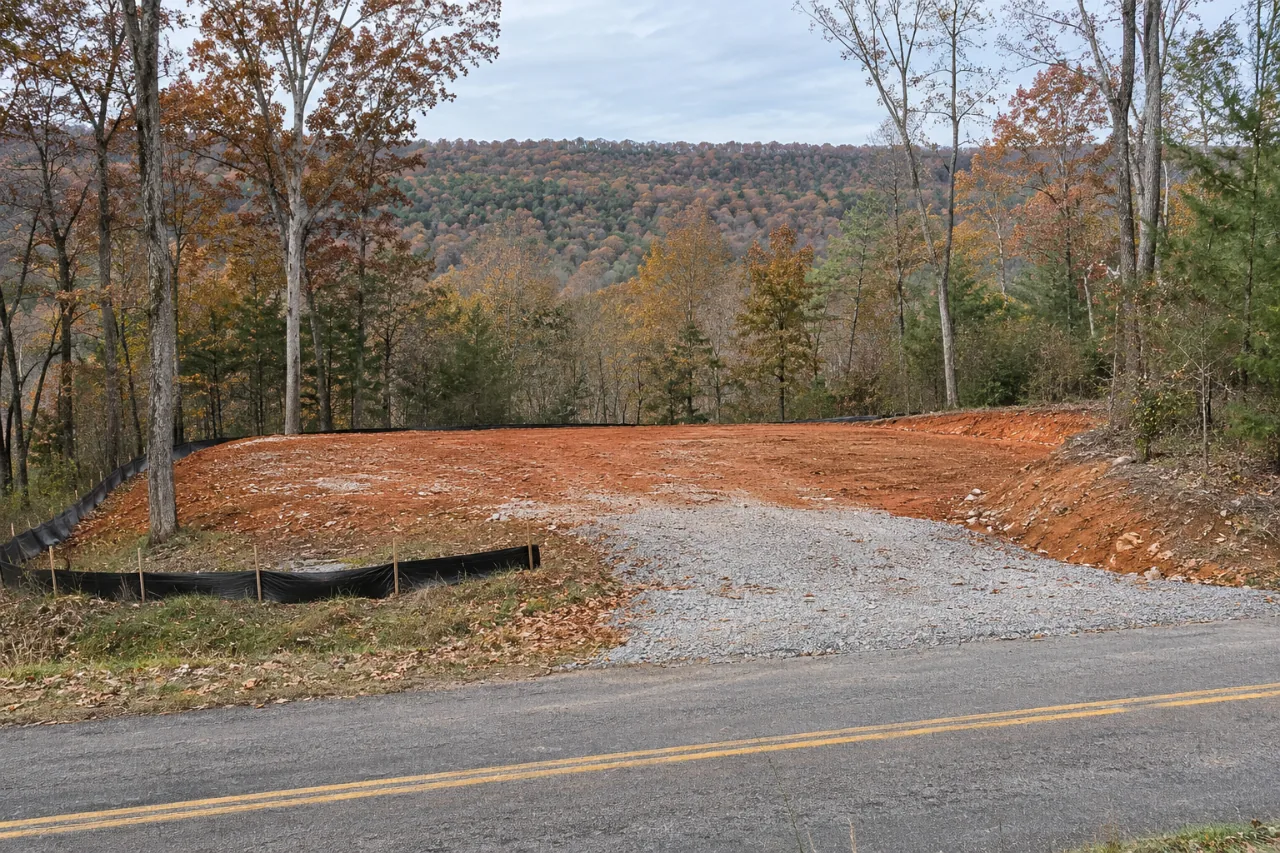
Lot clearing for a house in Roane County goes best when it happens in the right sequence. The septic soils get looked at while the ground is still undisturbed, permits are in hand before grading, and only the footprint of the house, the drive, and room to work gets stripped to clay. Below is that sequence for a wooded lot in the valleys around Kingston, Harriman, Rockwood, or Midtown, or out toward Greenback in western Loudon County: septic, building permit and zoning, the state's one-acre line, low ground, rock, the drive, debris, and what it costs.
Step one on a septic lot: the soil evaluation
Where there's no sewer line, the soil that can take a septic system decides where the house can go, and a dozer pushed across that soil can spoil it. Septic permits here are handled by TDEC's Division of Water Resources, and its Knoxville Environmental Field Office, which serves both Roane and Loudon counties, takes septic questions at (865) 594-6035. TDEC's septic FAQ (last updated July 21, 2026) lays out what to do before its staff visit:
- Apply through TDEC's online septic service request.
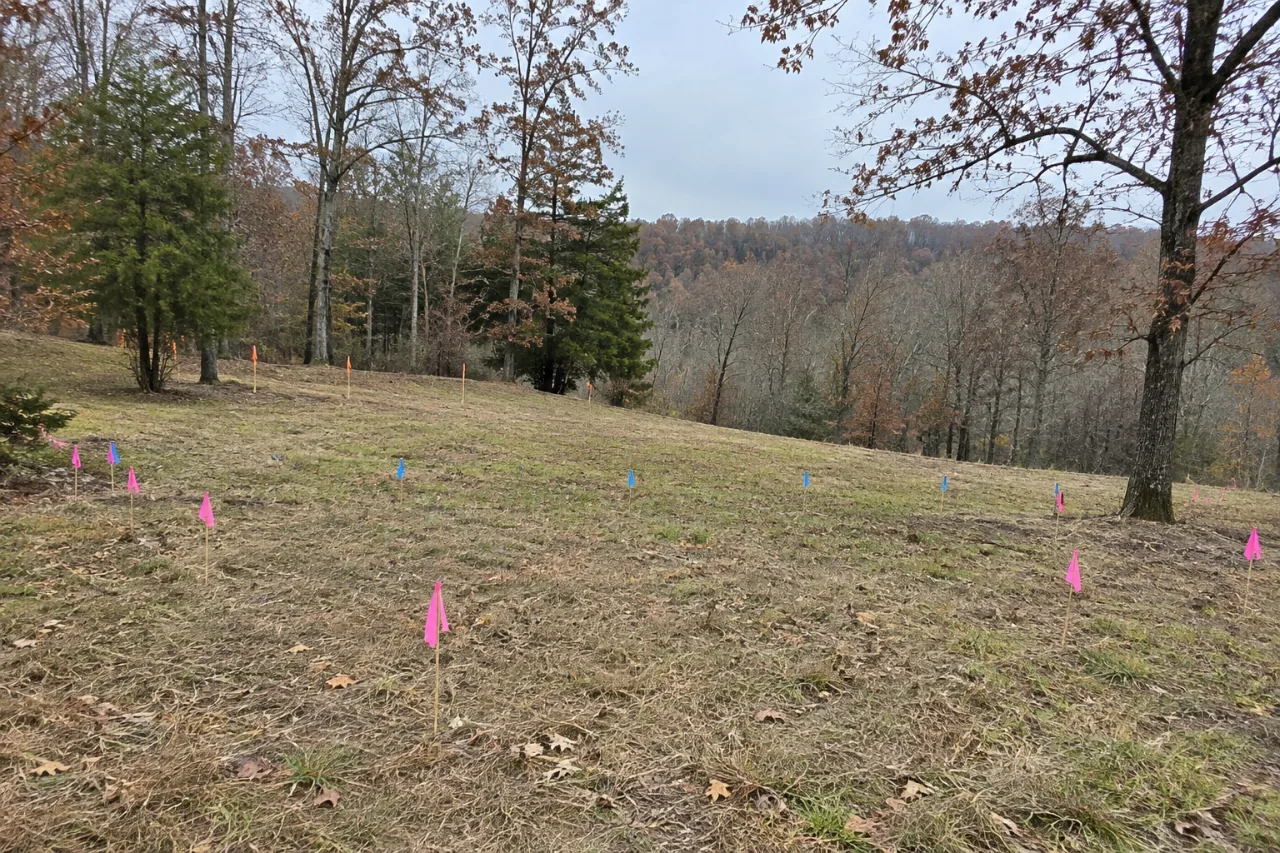
- Mark the property lines and corners, with stakes no more than 200 feet apart on long lines.
- Stake the four corners of the house pad, counting porches, patios, a garage, or a pool.
- Mow or bush hog the grass and brush around the house site and the areas to be evaluated.
- Hold off on everything else. The FAQ says "Soil disturbance, cutting and filling should not take place" as part of getting ready.
TDEC says processing can take up to 45 days after it has a complete application. On a septic lot, then, the first machine should be a bush hog, and the excavator waits until the septic area is known and flagged. Once it is, keep tracks, brush piles, and burn piles off it for the rest of the job.
For lots in a new Roane County subdivision, the county's subdivision regulations (revised November 2024) call for a TDEC certificate on the plat stating the subdivision is "generally suitable for subsurface sewage disposal systems," and allow lots to be turned down for poor soils with a perc rate over 70 minutes per inch.
Building permit and zoning
Unincorporated Roane County. The county's Building Codes and Zoning Department enforces the 2024 International Building Codes along with the county's zoning, from 308 N. 3rd Street in Kingston, 865-717-4230, weekdays 8:30 to 4:30. Its page says building permit applications and inspection requests need to be in by 4:00 p.m. County zoning applies outside the cities; the Planning and Zoning Department, 865-717-4232, handles subdivision review.
Inside Kingston, Harriman, or Rockwood. The county's planning page says those three cities set their own zoning. Ask the city about building and site permits before you clear. Harriman's zoning ordinance, for one, has its building official issuing driveway permits.
Western Loudon County. Loudon County Planning and Codes Enforcement is at 101 Mulberry Street in Loudon: planning 865-458-2055, codes 865-458-4470. The county's stormwater rules apply only inside the Census Bureau's urbanized area, so a rural lot near Greenback or Philadelphia may be outside them. Ask the codes office which side of that line your lot is on.
The state's one-acre line
TDEC's construction stormwater permit covers sites where clearing, grading, or excavation disturbs one acre or more, as well as smaller ones belonging to a larger common plan of development or sale. The new 2026 general permit took effect October 1, 2026 and runs to September 30, 2031. The site's operator files a Notice of Intent, site map, stormwater plan, and fee through MyTDEC Forms; for 1 to under 5 acres the fee is $250, with a $125 annual fee if the project lasts more than a year.
A single house lot often stays under an acre if the clearing is kept to what the house actually needs. Count the drive, the septic field, and any shop or garden area in the total, though. If you're inside Loudon County's urbanized area, its stormwater resolution also applies at an acre and keeps a 30-foot natural buffer along streams on construction sites.
Low ground near creeks and the lake
A valley lot may slope down to a branch or a cove. Roane County's subdivision regulations say each lot needs a building site "not subject to flood," that building sites must be at least one foot above the base flood elevation, and that land in a floodway can't be platted for building. Before clearing or filling low ground, ask Roane County Building Codes and Zoning where the flood lines fall. Work in a creek channel or on its banks needs a TDEC Aquatic Resource Alteration Permit, and lake shoreline has TVA's rules; see the lake lot guide.
Clay, chert, and rock under the pad
This is Ridge-and-Valley country. The federal ecoregion description for the limestone valleys calls the bedrock "limestone and cherty dolomite," and the shale valleys are underlain by shale with some narrow limestone bands. NRCS descriptions of soils from this region give a sense of what a pad can turn up: Fullerton soils have red clay subsoil with 20 to 30 percent chert gravel, and Talbott soils are yellowish-red clay over limestone at 20 to 40 inches, with karst in some areas. Ask how a quote handles rock that won't come out with a bucket, and whether hauling it off is included.
The drive and buried lines
On a sloping lot the drive is often the biggest stretch of disturbed ground, so run it across the slope where you can (the steep lot guide explains). Where it meets a road, ask whoever maintains the road what it needs. Before grading or pulling stumps, whoever is digging needs a free Tennessee 811 ticket, filed three to ten working days ahead.
What happens to the trees and brush
Saw logs can sometimes be sold or kept for firewood. The rest is mulched, ground, hauled, or burned. Outside city limits, a free Division of Forestry permit is needed from October 15 through May 15 for any fire within 500 feet of woods or grassland. Kingston requires a city permit all year, and the City of Loudon won't permit burning wood waste for land development unless an air curtain unit is used. Burning clearing debris goes through each rule and the other options.
What clearing a house site costs
HomeAdvisor's 2025 land clearing guide (checked October 2026) puts a typical national clearing job at about $3,799, in a range of $1,404 to $6,205. For a quarter-acre lot it lists $125 to $500 lightly wooded and $750 to $1,400 heavily forested, and it lists grading and leveling at $1,000 to $3,300, not counting the clearing. Slope, chert, stumps dug out, hauling, silt fence, straw, and seed all add to a real lot here. Treat those as national reference points. Your price is whatever the contractor writes down after walking the lot; the cost guide has more figures.
House site questions
How much of the lot should come out?
The house footprint, a working margin around it, the drive, and access to the septic area. Walk it with your builder and flag the trees you're keeping. Every tree that stays is one less to pay for, and every square foot left in roots is one less to keep from washing.
Should the stumps be ground or dug out?
Both, in different spots. Stumps under the house, the drive, and anything else that will be built on should be dug out. Elsewhere, grinding or mulching leaves roots in place to hold the soil.
Will a contractor clear before the septic evaluation?
Bush hogging and mowing to get the site ready are fine and are what TDEC asks for. Digging, cutting, and filling should wait until the evaluation is done.
How this site can help
Tell us where the lot is, about how big it is, and whether the house spot and septic area are settled. That goes to one independent contractor who does house-site work near you. They'll walk the lot, quote it in writing, and leave the decision to you. There's no charge for the referral.
Ready to have someone look at the property?
Call, or send a few details online. The referral costs you nothing.