
Brush and Fence Line Clearing in Roane County, TN
Brush and fence line clearing in Roane County usually means fighting the same handful of plants: Chinese privet, bush honeysuckle, autumn olive, multiflora rose, and kudzu. They crowd into fence rows, woods edges, and field margins, and most of them come right back after a single cutting. This guide covers how to recognize each one, what UT Extension says about controlling it, why the second season matters as much as the first, and the fence, neighbor, and buried-line questions that come with clearing along a property edge.
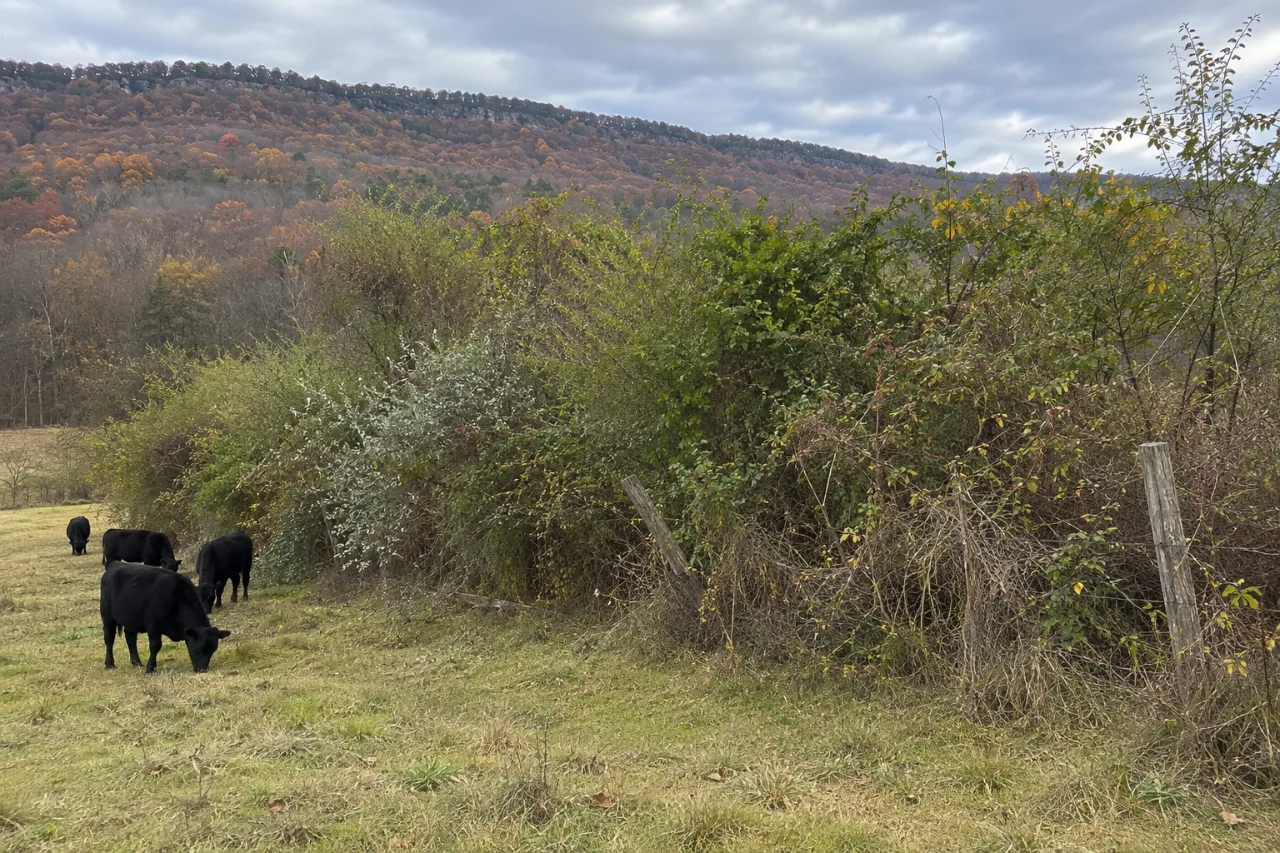
The five plants behind most brush jobs
Chinese privet. A shrub that forms dense thickets and, in UT Extension's words, shades out native plants and reduces wildlife habitat. UT's 2024 privet fact sheet says it will "resprout from roots and stumps," so getting rid of it is "a multi-year effort." An older UT pasture weed sheet adds that mowing slows it but resprouting still happens, and that heavy infestations can take two to three years to clear.
Bush honeysuckle. The shrub kinds, as opposed to the Japanese honeysuckle vine. The Forest Service's field guide to southern invasive plants says the bush honeysuckles colonize by root sprouts and spread through seeds that birds and other animals carry. UT's honeysuckle fact sheet says control "works best early," starting with pulling, cutting, mowing, or fire and following with herbicide.
Autumn olive. A shrub of open ground and edges. UT's autumn olive fact sheet says it "thrives in many open and edge habitats," fixes nitrogen so it can grow on poor soil, and "resprouts strongly after cutting or burning."
Multiflora rose. Long, drooping, thorny canes that mound up and sometimes climb into trees. A WVU Extension and Soil Conservation Service bulletin on its control says it spreads aggressively on bare or thin ground such as roadsides and overgrazed pastures, that birds scatter the seed, and that where it sprouts after cutting, mowing followed by treating the stump works better than mowing alone.
Kudzu. A perennial vine in the pea family. UT's kudzu fact sheet says the tubers don't sprout, but the roots store enough to drive "vigorous regrowth" after mowing or grazing, burning alone won't control it, and control takes "annual follow-up treatments for at least three growing seasons."
Why one pass rarely finishes the job
Cutting or mulching these plants clears the view, but every one of them has roots that survive. What happens next depends on what you do the following season. A realistic plan for a grown-up fence row has two parts:
- Knock it down. Mulch, cut, or pull the top growth, and open the fence line so you can reach it again.
- Treat what comes back. UT Extension's sheets describe the tools: cut-stump treatment with glyphosate or triclopyr on privet stumps, triclopyr basal bark or cut-stump treatment on bush honeysuckle, and foliar sprays on smaller plants and regrowth. Timing differs by plant and product, and each sheet gives it; honeysuckle sprays, for example, go on in early spring or late fall. Expect to repeat treatments.
Herbicides go on according to the label, which also sets any grazing restrictions. Ask who will apply them, whether follow-up is in the quote, and when. If you'd rather not use herbicide, regular mowing of the cleared strip keeps regrowth down, though UT's sheets describe these plants resprouting after cutting and mowing. The bulletin on multiflora rose also notes that goats will strip its stems up to about five feet.
Save the fence or start over?
Decide this before the work starts, because it changes the method. If the old woven or barbed wire is staying, the machine works one side and the wire side is done by hand with saws and loppers, which is slower and costs more. If the fence is coming out anyway, the row can be mulched straight through and new fence built on clean ground. Old wire buried in brush and grown into trees is hard on a mulching head, so walk the line with the contractor and point out every piece you know about.
- Property lines and neighbors. An old fence row isn't always the deeded line. Talk to the neighbor before anything on or near the line is cut, and get a survey if you aren't sure where it runs.
- Livestock. Plan where the cattle will be while the machine is working and while any treated brush or wire is down.
- New posts. Setting posts is digging. Tennessee's utility damage prevention rules require notice through Tennessee 811 at least three, and not more than ten, working days before excavation. It's free.
- Branches and wet weather ditches. If the fence row crosses a creek, keep the machine out of the channel. Altering a stream bank needs a TDEC Aquatic Resource Alteration Permit; ask the Knoxville field office, (865) 594-6035.
Brush on lake property
Invasive plants turn up along lake shorelines too. On TVA-owned shoreland, the federal vegetation rule lists poison ivy, Japanese honeysuckle, and kudzu, along with other exotic plants on TVA's list, as plants that may be cleared, but TVA's FAQ says written approval is always needed for vegetation work on its property, and no herbicide may be used there unless the approved plan allows it. Put the invasive plants in your vegetation management plan. Lake lot clearing explains the process.
What brush clearing costs
Brush and fence row work is usually priced by the hour or the day, since a long, narrow strip doesn't fit per-acre pricing well. Hourly figures in HomeAdvisor's forestry mulching guide (checked October 2026) run from $125 to $200 for light underbrush with small trees up to $200 to $400 where the brush is heavy and dense; both are national numbers. Hand work along wire you're saving, old fence buried in the brush, steep banks, and follow-up treatment visits all add time. Ask each contractor how many hours or days they expect and what the second-season visit costs. The cost guide has the rest of the published figures.
Brush and fence line questions
Will the privet come back after mulching?
Expect it to. UT Extension says it resprouts from roots and stumps. Treating the regrowth the next season is what turns a cleared fence row into one that stays clear.
Can a contractor clear a fence row without tearing out the fence?
Usually, by working the brush back from one side with a machine and finishing along the wire by hand. Say up front that the fence is staying so it's priced that way.
What time of year suits this work?
The knockdown can happen most of the year when the ground is dry enough. Follow-up treatment has its own timing by plant; UT Extension's honeysuckle sheet, for one, recommends foliar sprays in early spring or late fall.
Is the cleared brush burned?
Mulching leaves nothing to burn. Cut brush can be piled and burned where it's allowed, with a state permit in season; see burning clearing debris.
How this site can help
Tell us how long the fence row is, what's growing in it, and whether the fence stays. Your request goes to one independent contractor who takes brush work near you. They'll look at it, give you a written price, and you choose whether to hire them. There's no charge for the referral.
Ready to have someone look at the property?
Call, or send a few details online. The referral costs you nothing.